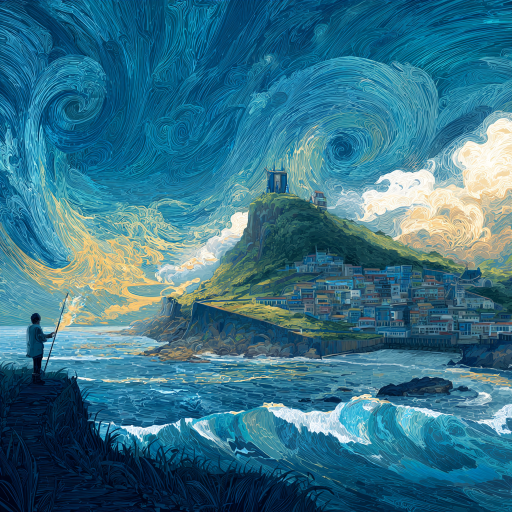
In the world of fiction, the greatest heroes are often born into abandonment. They arrive in darkness, told they do not belong, consigned to the margins. And yet—despite the shadows—they choose to live as if light were not a luxury, but a birthright.
Taiwan, too, lives in this paradox. On the stage of history, it is the orphan: unacknowledged, denied, dismissed. After 1971, when it lost its United Nations seat, Taiwan was pushed into the cupboard under the stairs of world politics—a place meant for storage, not voice. Like a child marked by his lineage, Taiwan inherits a name both blessing and curse: “China” in its bones, and for that very reason, a target of Beijing’s restless unease.
But history, like myth, does not allow the orphan to remain hidden forever. In 1979, when the United States passed the Taiwan Relations Act, it was not quite acceptance, not quite recognition—perhaps more like an invitation delivered with a wink: tenuous, conditional, but real. A letter, slipped under the door, whispering that the world of light had taken notice.
Since then, Taiwan has built itself a curious magic. Not a magic made of spells or charms, nor even silicon alone—though semiconductors power half the modern world—but a magic stitched together from something rarer: democratic practice, free speech, pluralism, even marriage equality. In Asia, this was not fate handed down, but freedom painfully conjured—each election, each street protest, a charm against amnesia and fear.
Of course, no orphan-hero grows without a nemesis. Hovering over Taiwan is a Voldemort of its own: Beijing’s obsession with “oneness.” It wears many faces—military intimidation, economic coercion, endless campaigns of information warfare. And like every dark lord, its demands are simple: silence, conformity, obedience. For Taiwan, existence itself becomes defiance.
Others have fallen in this struggle for autonomy. Hong Kong learned the hard way what happens to the “spares” on the authoritarian chessboard: dismissed, extinguished, mourned only in whispers. Taiwan, seeing this, carries the body of that memory back into the public square, insisting that denial will not erase truth.
It is not alone. Imperfect, delayed, sometimes hesitant, its allies nonetheless exist: the United States, Japan, Europe. They are not saviors, but fellow resisters—the friends who, despite squabbles and absences, arrive when it truly matters. In literature, they’d be the red-haired loyalists, the bookish strategists, the gentle half-giants: flawed, human, but present in the fight.
What makes Taiwan’s story remarkable is not inevitability, but choice. Faced with temptation—of profit through compromise, stability through control, safety through submission—it turned instead toward democracy. That road has always been precarious, but it is also the only one that leads toward freedom.
As one wise character once said: even in the darkest of times, one must remember where the light switch is. Taiwan has found its own. Not by waiting for rescue, but by choosing—again and again—to walk into the metaphorical forest, to face danger with defiance and faith. To insist on freedom in a world too weary or too frightened to speak of it.
And that is why Taiwan is more than a beleaguered island, more than a contested status. It is the orphan who refuses extinction, who insists on becoming a subject rather than an object. It is, in the end, not the victim of darkness, but the unlikely proof that the oldest magic—the magic of choosing light—is still the strongest we have.
Leave a Reply